When Ready-Made Clothing Became Common
Learn when ready-made clothing took hold, how nineteenth-century production and retail helped it spread, and why custom tailoring remained alongside it.
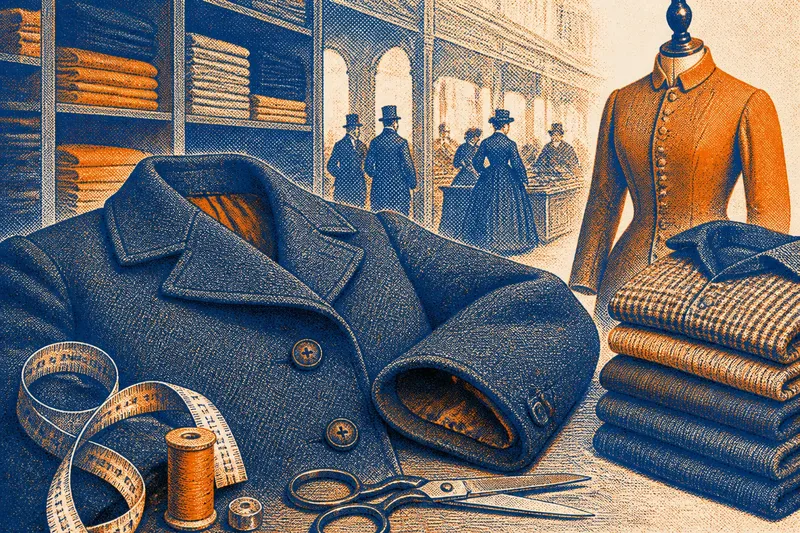
Ready-made clothing spread through the nineteenth century, though there was no single year when shops suddenly replaced dressmakers and tailors. The change gathered pace as expanding production and retail made more garments available before a customer ordered them.
A gradual nineteenth-century shift
Clothes made for a particular wearer remained a familiar route for much of the nineteenth century. People might sew at home, alter inherited garments, or pay a tailor or dressmaker; access depended on means, skills and local trade. This was not a world in which everyone wore bespoke clothing.
Ready-made garments existed before the nineteenth century, especially in forms that were easier to produce in standard sizes, such as some workwear and military clothing. During the nineteenth century, mechanised sewing, organised factory work and wider distribution helped ready-made clothing expand into civilian markets. The pace differed by garment, place and customer.
By the later nineteenth century, urban shops and department stores could display a broader selection of garments made in advance. The exact timing varied: a buyer’s options depended on what local shops stocked and what kinds of clothing manufacturers could produce consistently. Ready-made clothing became a growing part of ordinary retail, not an overnight substitute for commissioned work.
How production changed
Making garments in batches shifted work away from a single maker completing one piece for one customer. Workers could cut, sew and finish repeated designs, while machinery helped with particular operations. Retailers could then display stock and sell garments without first taking an individual order.
Repeatable patterns made production and stockkeeping more manageable, but they also narrowed the range of shapes offered. Sizes grouped bodies into categories rather than recording each customer’s measurements. A label was a maker’s guide to a garment, not a universal statement about how it would fit.
Some garments were easier to standardise than others, and a ready-made item could still need alteration. A coat that fitted well at the shoulders might have sleeves that needed shortening; the construction could determine whether that change was straightforward. Custom tailoring continued alongside shop-bought clothing.
Choices on the shop floor
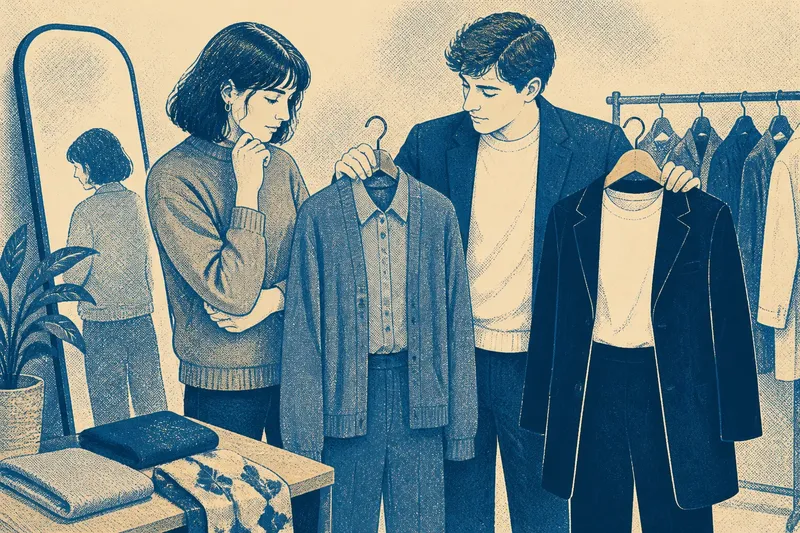
Ready-made clothing let shoppers inspect finished garments, compare fabrics and details, and buy without waiting for a commission. But the design decisions had largely been made in advance. A customer chose from the stock available rather than specifying every feature.
That trade-off remains easy to see. Imagine a shopper whose starting point is a plain wool coat with sleeves covering the hands. They try it on, confirm that the shoulders sit correctly, then ask an alterations tailor whether the cuff construction permits shortening. If it does, they can weigh the alteration against the coat’s other qualities; if it does not, they can reject that coat or accept the longer sleeve. The example is invented, but the decision turns on observable fit and construction.
Not every detail merits close inspection. Counting identical buttons or trying to infer a garment’s entire history from one seam is usually more effort than it repays; labels, construction and context offer clues, not a complete record.
Common questions about ready-made clothing?
When did ready-made clothing become common?
It became more widespread during the nineteenth century as mechanised production and retail distribution developed. The timing varied by location, garment and customer, so there is no single date that fits every wardrobe.
Did ready-made clothing begin in the nineteenth century?
No. Ready-made garments existed earlier, particularly for uses where standard forms were practical. The nineteenth century brought wider production and retail availability, rather than the first garment ever made before its buyer appeared.
Did ready-made clothing replace tailoring?
No. Tailors and dressmakers continued to make garments, and alteration remained useful for shop-bought clothes. Ready-made clothing added a route to buying garments already made; it did not eliminate individual commissions.
Why did shops sell standard sizes?
Repeated patterns made it easier to produce, display and replenish stock for multiple customers. The compromise was that a size category could not account for every body shape or preference.
Custom work alongside stock
Ready-made clothing changed where decisions sat. A commissioned garment began with a wearer’s requirements and relied on a maker to interpret them; a stocked garment began with a design and asked the wearer to choose among available versions.
That distinction helps explain when ready-made clothing took hold: gradually, as production and retail made advance-made garments more accessible, while custom work remained part of the same clothing economy. A garment may show signs of batch production, but its label or seams alone cannot establish where or when it was sold. History is rarely obliged to fit on a tag.