A Gentle Clothing Reset for the Change of Season
A gentle clothing reset helps you sort ready-to-wear pieces from garments needing ordinary care, so seasonal storage starts with a clear, useful wardrobe.
A gentle clothing reset keeps the next season’s clothes usable by separating what is ready to wear from what needs ordinary care or a pause. Start with a small group of garments, not the whole wardrobe: the aim is to make sound decisions, not to turn a change in weather into a domestic expedition.
Sort by readiness
Take out the clothes you have worn recently, along with a few pieces you expect to reach for soon. Check each in good light for obvious marks, loose buttons, missing fastenings, odours or wrinkles. Then place it in one of three groups: ready, care needed, or set aside.
“Ready” means clean enough to wear and in a condition you are content to be seen in. A jumper with a slightly folded cuff may qualify; a shirt with a visible sauce mark does not. The standard is practical, not ceremonial.
- Ready: clean, dry and wearable without another task.
- Care needed: suitable for routine washing, airing, brushing or a minor repair.
- Set aside: out of season, or not currently useful, and ready to store once clean and dry.
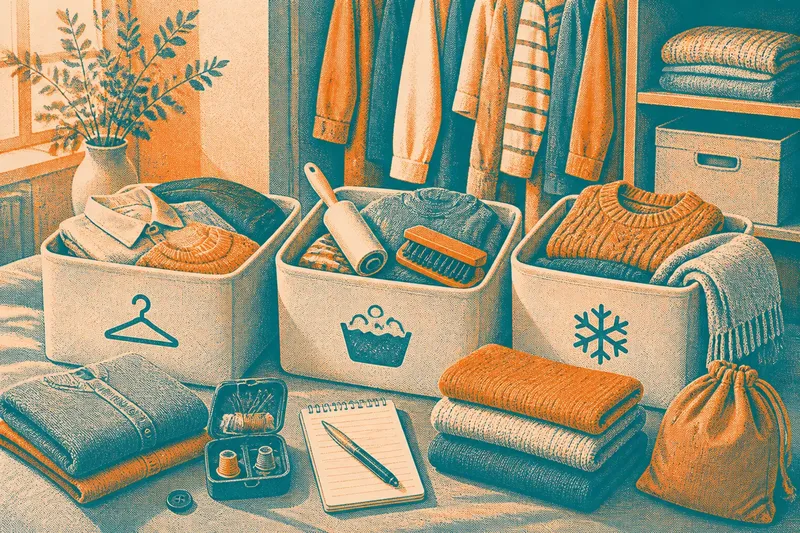
Keep the care-needed group visible and modest. A laundry basket, a chair or a labelled tote is enough; hiding it in a cupboard tends to convert a small job into a mysterious future obligation.
Choose ordinary care
For everyday dust and surface fluff, a clothes brush or lint roller may be sufficient. Brush wool gently in the direction of the fibres, and use a lint roller on sturdier fabrics where it does not snag. A clean, dry microfibre cloth can lift light dust from some smooth fabrics, but avoid rubbing a delicate surface.
For washing, look at the care label and consider the fabric, colour and construction. Separate items that might transfer dye, close zips and fasten hooks so they do not catch other clothes, and turn printed or embellished garments inside out where appropriate. Use a mesh laundry bag for small or delicate items if the label permits machine washing.
Drying deserves the same attention as washing. Reshape knitwear on a flat surface rather than hanging it wet, which can pull it out of form. Hang woven garments with enough room for air to circulate; a crowded rail keeps dampness and creases company. Follow the care label and manufacturer’s instructions, particularly for delicate fibres, trims and specialist finishes.
Small repairs are useful when they are genuinely small. A button that needs sewing back on, a loose hem thread or a snag that can be secured without pulling may be manageable at home. If a seam is opening under strain, fabric is thinning, or the repair would alter the garment’s shape, set it aside for a tailor or other suitable professional rather than improvising with adhesive tape and optimism.
Prepare clothes for storage
Only store garments that are clean and completely dry. Food, body oils and dampness can attract trouble or leave marks behind; folding away a garment that merely seems dry is an unhelpful gamble. If it has just been washed, give it time to air in a well-ventilated place before packing.
Choose storage according to the garment. Fold knitwear on a shelf or in a breathable box so its weight is not hanging from the shoulders. Woven jackets and dresses can stay on suitable hangers in a clean wardrobe, with room around them. Cotton bags or clean pillowcases can shield special pieces from dust while allowing more airflow than tightly sealed plastic.
Keep storage away from damp corners, direct sunlight and heat sources. Before using a storage box, make sure it is clean and dry. A small label saying “winter knitwear” or “summer linen” is more useful than a carefully arranged mystery parcel, particularly when the weather changes its mind.
Make one useful decision
The reset is also a chance to notice what repeatedly needs attention. A coat that always comes out with a loose button may need a proper repair rather than another temporary fix. A dress that is clean but never chosen could be set aside for a later decision, instead of being forced into the ready-to-wear group by sheer familiarity.
Say you find a linen shirt with a faint mark at the cuff and a loose button. Put it in the care-needed group, check its label, wash it appropriately, and sew the button on once the shirt is dry. The expected result is a clean shirt with a secure fastening; if the mark remains, reassess it before storing rather than folding the uncertainty into next season.
It is not worth laundering every garment simply because the calendar has changed. If an item is clean, dry and ready to wear, leave it alone. Extra handling can create work without improving the clothes.
Questions before storage?
Should clothes be washed before they are stored?
Store garments clean and fully dry, but do not wash a piece that is already clean just to mark the season. If it has been worn or has a mark, choose care suited to its label and fabric before putting it away.
Can knitwear go on hangers?
Folding is usually kinder to heavy knitwear because its weight can stretch the shoulders on a hanger. Light knits may hang well on a shaped hanger, but check for drooping or distortion before leaving them that way for a long period.
What should I do with a stain that remains?
Do not store the garment as though the mark has disappeared. Use a suitable treatment for the fabric, or ask a cleaner if the item is delicate, valuable or difficult to identify; aggressive rubbing can damage fibres and spread a stain.
How do I keep the reset manageable?
Work by a manageable category, such as coats or knitwear, and finish sorting that group before opening another. A gentle clothing reset should leave you with clear next actions, not a larger pile and a renewed respect for the laundry basket.
Before closing a storage box or wardrobe door, check that the care-needed group has an actual next step: wash, mend, air or seek help. That small decision is what turns a seasonal pause into a useful one.